
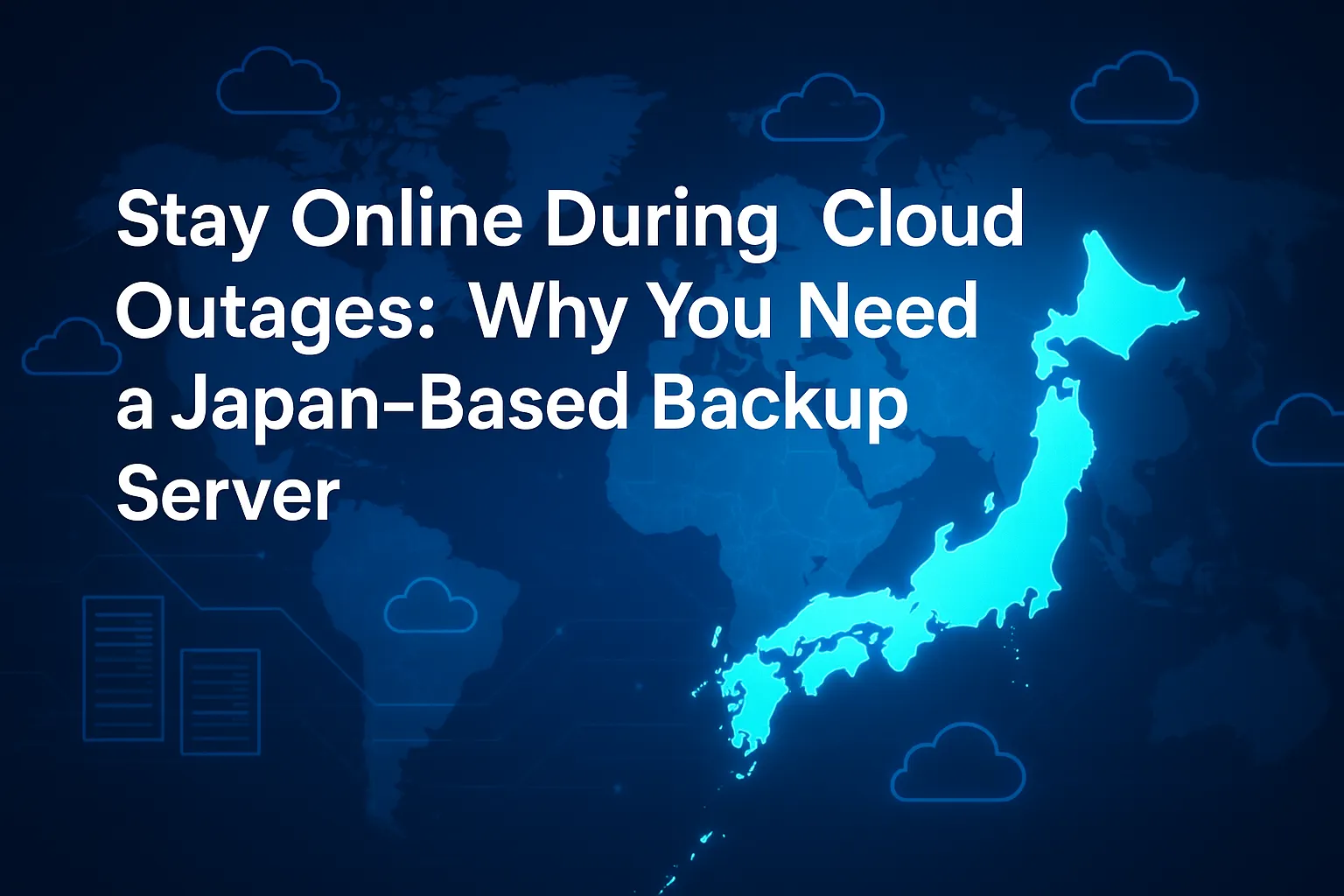
Even the world’s largest cloud providers, such as AWS and Microsoft Azure, experience service disruptions.
When these occur, global businesses can suffer unexpected downtime, data unavailability, or service interruptions — all of which impact revenue and customer trust.
To reduce this risk, many companies are turning to Japan-based backup servers as part of their BCP (Business Continuity Planning) strategy.
The Reality of Cloud Outages
Over the past few years, major outages have affected AWS Tokyo and other Asia-Pacific regions.
These incidents highlight a fundamental truth: no cloud is immune to failure.
Even with redundancy, regional dependencies can cause wide-scale downtime.
Common causes of outages include:
- Power and network failures in regional data centers
- DNS misconfigurations or authentication system failures
- Software updates or load balancing errors at the provider level
When a single cloud region goes down, all hosted resources — from databases to web applications — can become unavailable.
The Risk of “Single Cloud Dependency”
Many organizations rely solely on AWS or Azure for mission-critical workloads.
However, depending on a single provider introduces a single point of failure.
During a large-scale outage, your team may be unable to access systems, restore data, or even log in to the management console.
This can lead to extended downtime — sometimes lasting several hours.
The solution? Build a multi-layered backup environment using an independent Japan-based server.
Why Japan Is the Ideal Backup Location
Japan is known for its exceptional data center stability, advanced infrastructure, and low natural disaster risk compared to other parts of Asia.
With strict building codes, redundant power systems, and reliable connectivity, Japanese data centers offer a strong foundation for business continuity.
For a broader view of why overseas enterprises choose Japan-based data centers for their mission-critical workloads, the article below explores the trust, compliance, and stability aspects in more detail.
Why Overseas Companies Choose Japan’s Data Centers: Trust, Compliance, and Stability
- Stable Infrastructure: Multiple power grids and redundant fiber networks.
- Low Latency: Excellent connectivity across Asia and the U.S. West Coast.
- Compliance: Meets Japan’s APPI and GDPR-level privacy standards.
- Trust: Globally recognized for reliability and security.
Hosting a backup or secondary environment in Japan ensures that your critical systems remain available, even if a public cloud platform fails.
If you’d like to understand how Japan functions as a broader data hub for Asia — not just as a backup location — the article below provides a regional overview of connectivity and ecosystem strengths.
Why Global Companies Choose Japan as Their Asia Data Hub: Reliability and Compliance in One
Designing a Reliable Backup Architecture
Here’s how global companies are building resilient backup systems using Japan-based infrastructure:
- Deploying a VPS or dedicated server in Japan as a failover environment.
- Synchronizing essential data through secure VPN tunnels or rsync over SSH.
- Implementing automated failover or manual switchover protocols during cloud outages.
- Regularly testing the backup environment to ensure smooth recovery operations.
This hybrid strategy — combining cloud scalability with on-premise reliability — provides a strong safety net for mission-critical services.
If you plan to synchronize data between your primary cloud environment and a Japan-based VPS over VPN, the site-to-site SoftEther bridge guide below shows a practical pattern many teams reuse.
SoftEther VPN on Windows: Site-to-Site Bridge from Overseas to Japan
Winserver: Reliable Japan-Based Infrastructure for Global Companies
Winserver offers Windows-based VPS and dedicated servers hosted entirely within Japan (Osaka Data Center).
Designed for international clients, these environments deliver both performance and regulatory compliance.
- Fully managed, locally operated data center in Osaka.
- 24/7 monitoring and English-speaking technical support.
- VPN-ready setup for secure connections from AWS or other cloud environments.
- Flexible plans for disaster recovery, BCP, or hybrid deployments.
By integrating Winserver into your global IT architecture, you can maintain uptime even during major cloud disruptions — without compromising compliance or speed.
Once you decide to use Japan as a backup or secondary region, the next step is designing a clear data localization strategy — what must stay in Japan and what can safely be replicated or transferred abroad. The article below walks through that process for global teams.
Data Localization Strategy for Overseas Corporations: Why Storing Data in Japan Matters
Looking for a Japan-Based VPS?
If you regularly access Japanese online services from overseas, a Japan-based VPS gives you a dedicated remote Windows environment hosted in Japan. Compare available plans, resources, and connection options to find a setup that fits your needs.
