

More U.S. and multinational corporations are choosing to establish local data servers in Japan for their subsidiaries and branch offices.
This trend is not only driven by compliance with Japanese laws but also by practical factors such as internal governance, VPN security, and efficient data access across regions.
Why Japanese Branches Choose Local Data Storage
When a foreign company operates a Japanese subsidiary, it often handles sensitive customer or employee data subject to Japan’s Act on the Protection of Personal Information (APPI).
To comply with these requirements and ensure low-latency internal access, many organizations deploy servers directly within Japan.
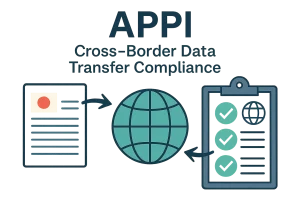
If you need a deeper breakdown of how APPI works for hosting in Japan and cross-border transfers, the article below is a practical guide for global legal and ops teams.
- Faster data access for employees in Japan
- Compliance with local privacy regulations and industry standards
- Improved control over internal systems and IT governance
In addition, local data storage demonstrates trust and transparency to Japanese customers — a key factor for business credibility in Japan.
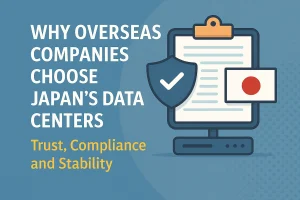
For a broader view of why overseas companies choose Japan-based data centers for their critical workloads, the article below explores the trust, compliance, and stability aspects in more detail.
Benefits of Internal Access Control and VPN Integration
Corporate IT teams are increasingly integrating VPN-based access control with local Japanese servers.
This allows secure communication between headquarters and local branches while maintaining network segmentation and audit trails.
- Encrypted data transfer between Japan and overseas headquarters
- Restricted access by department or location
- Reduced exposure to cross-border cybersecurity risks
Such setups are especially important for industries like finance, manufacturing, and consulting, where internal confidentiality is critical.
Secure Data Transfer Between Headquarters and Japan Branches
Data synchronization between the global headquarters and the Japan branch must be both efficient and compliant.
Modern corporate setups often use dedicated VPN tunnels or encrypted SFTP transfers to achieve this.
If you’re considering a dedicated site-to-site VPN between your overseas headquarters and a Japan-based VPS, the step-by-step SoftEther bridge guide below shows a practical pattern you can reuse.
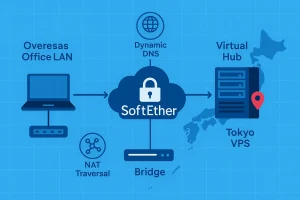
- Secure, point-to-point VPN connections for system integration
- Hybrid cloud or on-premises setups for redundancy
- Automated data backup within Japan for business continuity
By keeping mission-critical data locally in Japan while syncing essential records to global systems, companies can achieve the best balance of speed, security, and compliance.
The Compliance Advantage: Local Data for Audits and Reporting
Japanese subsidiaries are often required to submit operational or accounting data for local audits and compliance checks.
Having a local server environment simplifies these processes and allows rapid access during inspection periods.
- Facilitates legal and financial audits under Japanese jurisdiction
- Prevents data transfer delays or cross-border disclosure issues
- Ensures traceability and transparency for regulators and business partners
This local data approach strengthens the overall corporate governance framework, especially for companies subject to both Japanese and international compliance standards.
Winserver’s Enterprise Solutions for Secure Data Management
Winserver provides hosting solutions specifically designed for corporate and branch operations in Japan.
With a data center located in Osaka, all services are locally managed and monitored 24/7 by certified engineers.
- Windows VPS and dedicated servers for enterprise use
- VPN integration support for secure inter-office communication
- Optional compliance-focused features such as access logs and user management
For U.S. and multinational corporations seeking a reliable data base in Japan, Winserver ensures data sovereignty, compliance, and operational peace of mind.
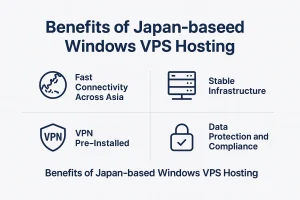
To better understand how a Japan-based Windows VPS can support these localization, security, and governance requirements in practice, the overview below is a useful companion.